Sustainability at the Airport
Hawkes Bay Airport is purpose-led; connecting people, business and regions while balancing positive financial returns with wider social and environmental outcomes. We do this by providing a safe, secure transport hub with sustainability at the heart of what we do.
Sustainability underpins our strategic plan and five pillars – Our Operations, Our People, Our Place, Our Partnerships, and Our Prosperity.
How we're behaving more responsibility
Our airfield, vehicles and car park
- Airfield - Runway lighting has been replaced with new and energy efficient LED system. Electric ground power provided to aircraft on most stands
- Vehicles - Our airside fire service and operational vehicles are fully electric or plug in hybrid PHEV
- Car Park - Two 75kW electric vehicle chargers for customers, upgrading 56 new LED lamps and reducing waste via our ticketless parking upgrade
Our terminal
- Is 100% fossil fuel free
- Building heating and cooling requirements are provided by energy efficient commercial heat pumps
- All lighting is energy efficient LEDs
- Internet of Things (IoT) sensors installed to monitor energy, water, temperature, humidity and and indoor air quality in real time
We also recognise that energy efficiency is vital in reducing our absolute carbon
emissions, so avoiding non-essential energy is another area of focus for our business.
Our terminal is 100% fossil fuel free and 100% renewable carbon zero electricity powered!
We achieve this by partnering with Ecotricity and electrifying our operations; here are some of our energy-saving initiatives.

Caring for Our Environment
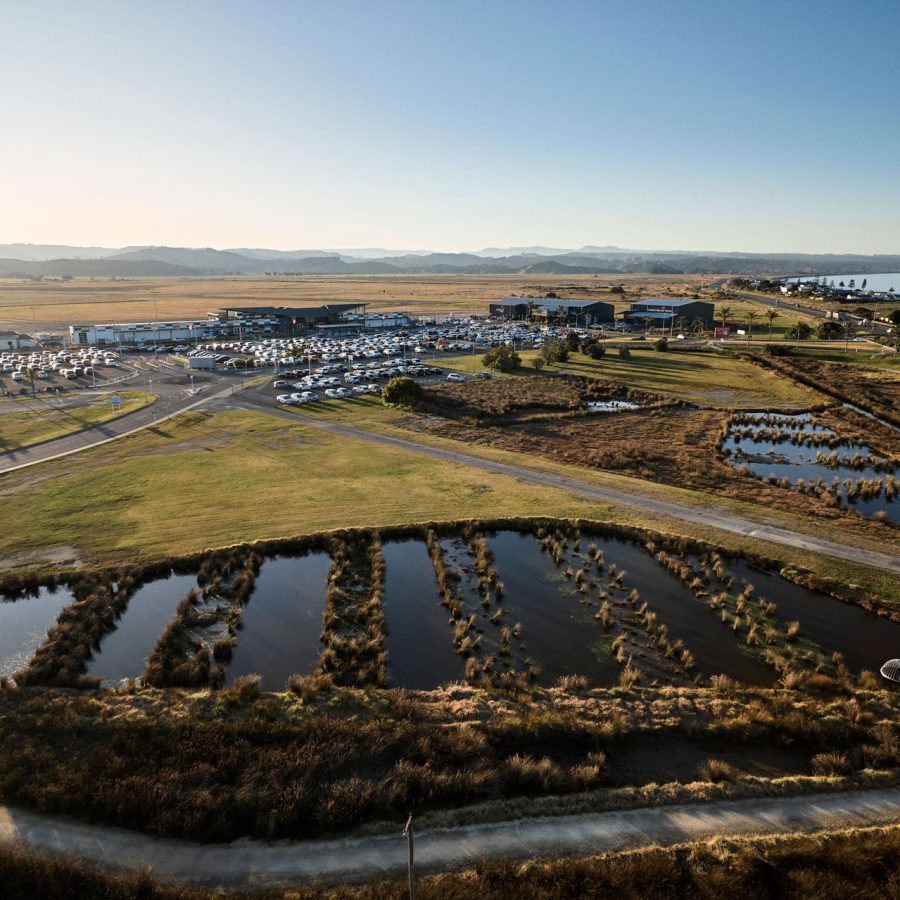
Our initiatives reach beyond the terminal. Surrounding the Aeropark is a vital wetland and habitat for native wildlife, including the all-important Kauaka, which is the inspiration behind our terminal design and company values.
We’ve partnered with and are platinum sponsors of Biodiversity Hawke’s Bay. We provide support for our local restoration projects and ensure the protection and enhancement of the unique biodiversity of our area.
Find out more about the critical mahi they do.
About Airport Carbon Accreditation
ACI launched the Airport Carbon Accreditation in 2009 after member airports adopted a landmark resolution on Climate Change to reduce carbon emissions from their operations with the ultimate goal of becoming carbon neutral.
As the only global, airport-specific carbon standard, Airport Carbon Accreditation provides airports with a common framework of seven levels of certification: ‘Mapping’, ‘Reduction’, ‘Optimisation’, Neutrality’, ‘Transformation’, ‘Transition’ and ‘Level 5’ and independently assesses and recognises the efforts of airports to manage and reduce their carbon emissions.

Our Carbon Accreditation Achievements
In February 2020, we succeeded in our first step towards carbon neutrality, gaining Level 1 of the internationally recognised Airport Carbon Accreditation programme.
In January 2021, we gained Level 2 ACA certification recognising Hawke’s Bay Airport’s commitment to emission reduction, climate change mitigation and sustainable development. Level 2 requires the airport to show that it has made meaningful change in its carbon emissions, and since 2018, HBAL has reduced its average emissions per passenger by 12%.
Achieving Level 3 (out of six levels) requires us to look beyond our own operations, so the next phase will see us work with our partners, such as tenants and contractors, to help bring their emissions down. We will also be looking to key partners in our community to collaborate on some larger-scale projects.
In 2023, we achieved a significant milestone in our carbon neutrality, joining less than 45 other Airports worldwide and being the only airport in Australasia to achieve 4+ transition status accreditation. A massive achievement for a small airport. This won us the Sustainability Initiative of the Year award at the New Zealand Airports Association Awards.
Learn more about what it takes to be recognised in this incredibly coveted category.


Saving for a bright future with ASB
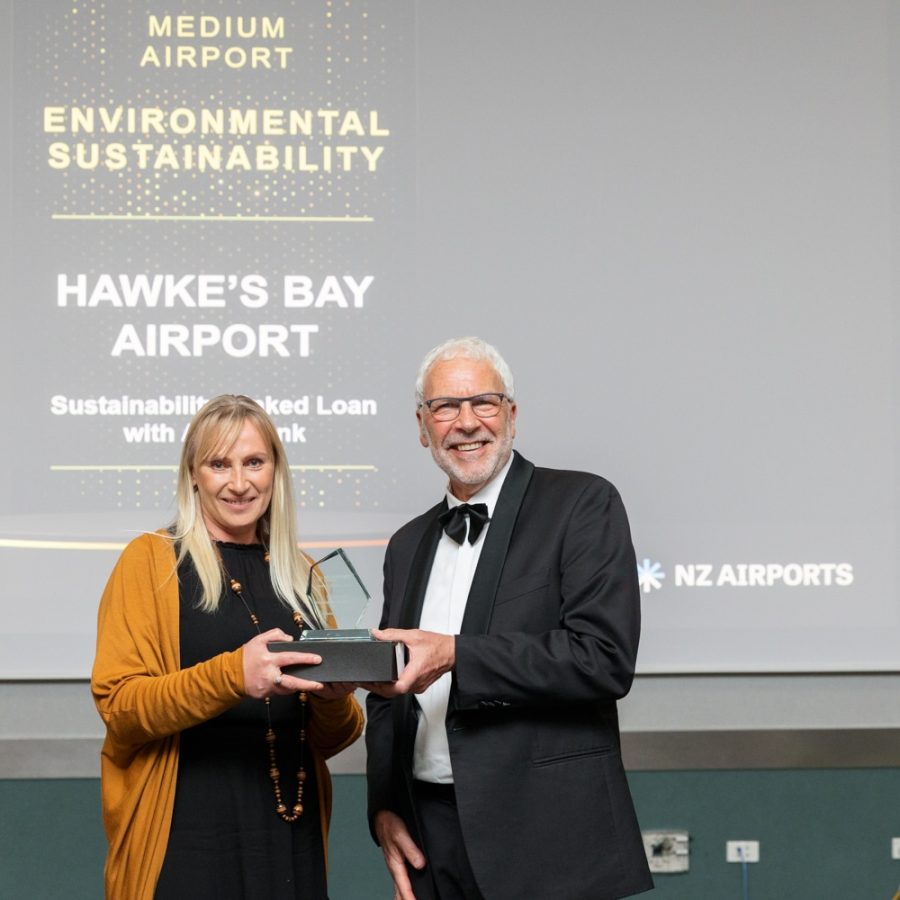
In November 2021, Hawke’s Bay Airport became the first airport in the country to partner with ASB as part of its sustainable linked loan initiative. Sustainability-linked Loans (SLLs) require the borrower to commit to key environmental, social, and/or governance (ESG) targets, adjusting borrowing costs based on their performance against these targets. The regional airport’s $23 million sustainability-linked loan uses ASB funds allocated under the Reserve Bank’s Funding for Lending (FLP) programme, which the bank has committed to using to support projects that meet sustainability or regional infrastructure criteria while supporting a greener economy and helping to combat climate change.
Awards & Achievements
New Zealand Airports Association Awards 2023
- Winner Medium Airport of the Year
- Winner Sustainability Initiative of the Year – for achieving Airport Carbon Accreditation
- Winner The Customer Engagement Initiative of the Year - for our response to Cyclone Gabrielle
New Zealand Airports Association Awards 2022
- Winner Medium Airport of the Year
- Winner of Sustainability Initiative of the Year – for ASB partnership
- Winner of Community Initiative of the Year (Biodiversity Week 2022 with Biodiversity Hawke's Bay)
Asia Pacific Airports Council International
- Platinum winner -Green Airports Recognition 2022 Carbon Management
